
The Ghan ranks as third best luxury train ride

Travelling by train can be one of the most luxurious ways to uncover a country’s beauty. Whilst some luxury train journeys promise stunning scenery or gourmet cuisine, each offers their own unique charm - the world at a leisurely pace.
This inspired the experts at Japan Rail Pass to analyse the most popular and talked-about luxury train rides across the globe to uncover the best. They did this by looking into a range of factors including Tripadvisor reviews, Instagram hashtags and global search volumes - their total was then weighted to create an index score.
Top 10 best luxury train rides across the globe
|
|
Train |
Location |
Tripadvisor Average Review Score |
Instagram Hashtags |
Global Average Monthly Search Vols |
Index Score (/10) |
|
1 |
Rocky Mountaineer |
Vancouver, Canada |
4.5 |
54,029 |
368,000 |
8.92 |
|
2 |
GoldenPass Express |
Montreux, Switzerland |
4.4 |
15,786 |
18,100 |
8.39 |
|
3 |
The Ghan |
Adelaide, Australia |
4.4 |
12,571 |
22,200 |
8.35 |
|
4 |
Rovos Rail |
Pretoria, South Africa |
4.4 |
12,146 |
33,100 |
8.31 |
|
4 |
Seven Stars in Kyushu |
Kyushu, Japan |
4.4 |
49,219 |
3,600 |
8.31 |
|
6 |
The Blue Train |
Pretoria, South Africa |
4.2 |
41,654 |
6,600 |
8.29 |
|
7 |
Venice Simplon Orient Express |
London, England |
4.4 |
8,731 |
33,100 |
8.13 |
|
8 |
British Pullman |
London, England |
4.4 |
5,222 |
5,400 |
7.77 |
|
8 |
The Royal Scotsman |
Edinburgh, Scotland |
4.3 |
3,910 |
8,100 |
7.77 |
|
10 |
Maharajas' Express |
New Delhi, India |
4.3 |
2,282 |
90,500 |
7.72 |
Rocky Mountaineer: Vancouver, Canada
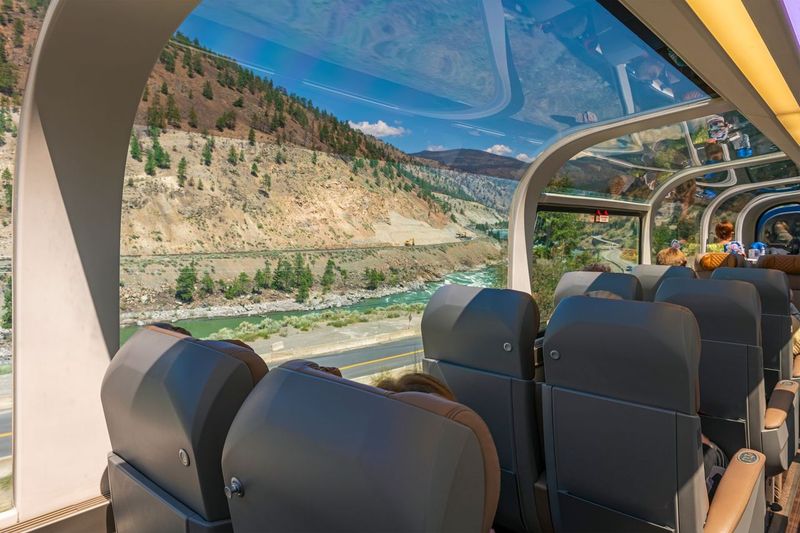
Rocky Mountaineer situated in Vancouver, Canada ranks as the world's best luxury train journey, scoring 8.92 out of 10. This luxury scenic train runs on four rail routes in British Columbia, Alberta, Colorado, and Utah. The luxury train has an average Tripadvisor score of 4.5 out of five, 54k in Instagram hashtags and is being searched for online368,000 a month on average - interestingly, these search volumes are 1,933% higher than second place and 1,558% higher than third place.
GoldenPass Express: Montreux, Switzerland
In second is the GoldenPass Express, scoring 8.39 out of ten. Located in Switzerland, the GoldenPass Express takes passengers from the resort town of Montreux to Interlaken in the Bernese Oberland. It’s a three-hour ride with four departures a day (in both directions). This experience has an average Tripadvisor review of 4.4 out of five, 15.6k tagged hashtags on Instagram and 18,100 online searches per month on average.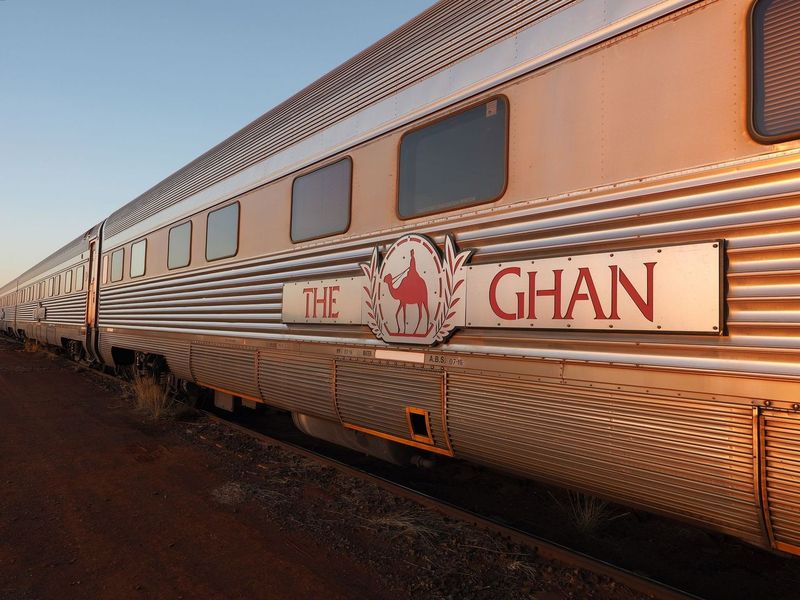
The Ghan: Adelaide, Australia
Scoring 8.35 out of ten and placing third is Australia’s The Ghan - a service that operates between the northern and southern coasts, through the cities of Adelaide, Alice Springs and Darwin on the Adelaide–Darwin rail corridor. This luxury ride has scored an average of 4.4 in Tripadvisor reviews, 12.5k tags on Instagram and over 22,200 average monthly searches.
Rovos Rail: Pretoria, South Africa & Seven Stars: Kyushu, Japan
In joint fourth Rovos Rail in South Africa and Seven Stars in Japan - both scoring 8.31/10 in the study. The Rovos Rail is a railway journey that explores the south of Africa, and is said to be one of the most luxurious train journeys in the world. Known as Japan’s answer to the Orient Express, the Seven Stars Kyushu runs east from Fukuoka to Oita Prefecture over the course of three nights and four days. Both luxury trains scored an average of 4.4 on Tripadvisor and 12k in Insta hashtags.
Methodology
The experts at JR Pass were keen to uncover the best luxury train rides across the globe.
To do this, they first put together a list of the most popular and talked about luxury trains. Sources: travelandleisure; timeout; cnn; nationalgeographic.
Keen to find an unbiased rating of each journey, they analysed each train on Tripadvisor, noting their review score and the number of reviews listed. To make the study fair, using both of these factors, they created a bayesian average.
Intrigued by tourists taking to Instagram to post about their trips, JR Pass noted the number of hashtags each train journey had.
To round off the final factor, they utilised Google Adwords to uncover how many global search volumes each journey was getting on average a month.
The data was then weighted to create a final index score, you can find the full dataset here.
This data was collected in July 2024 as is accurate as of then.